Mnemosyne – Topologies of an Archive
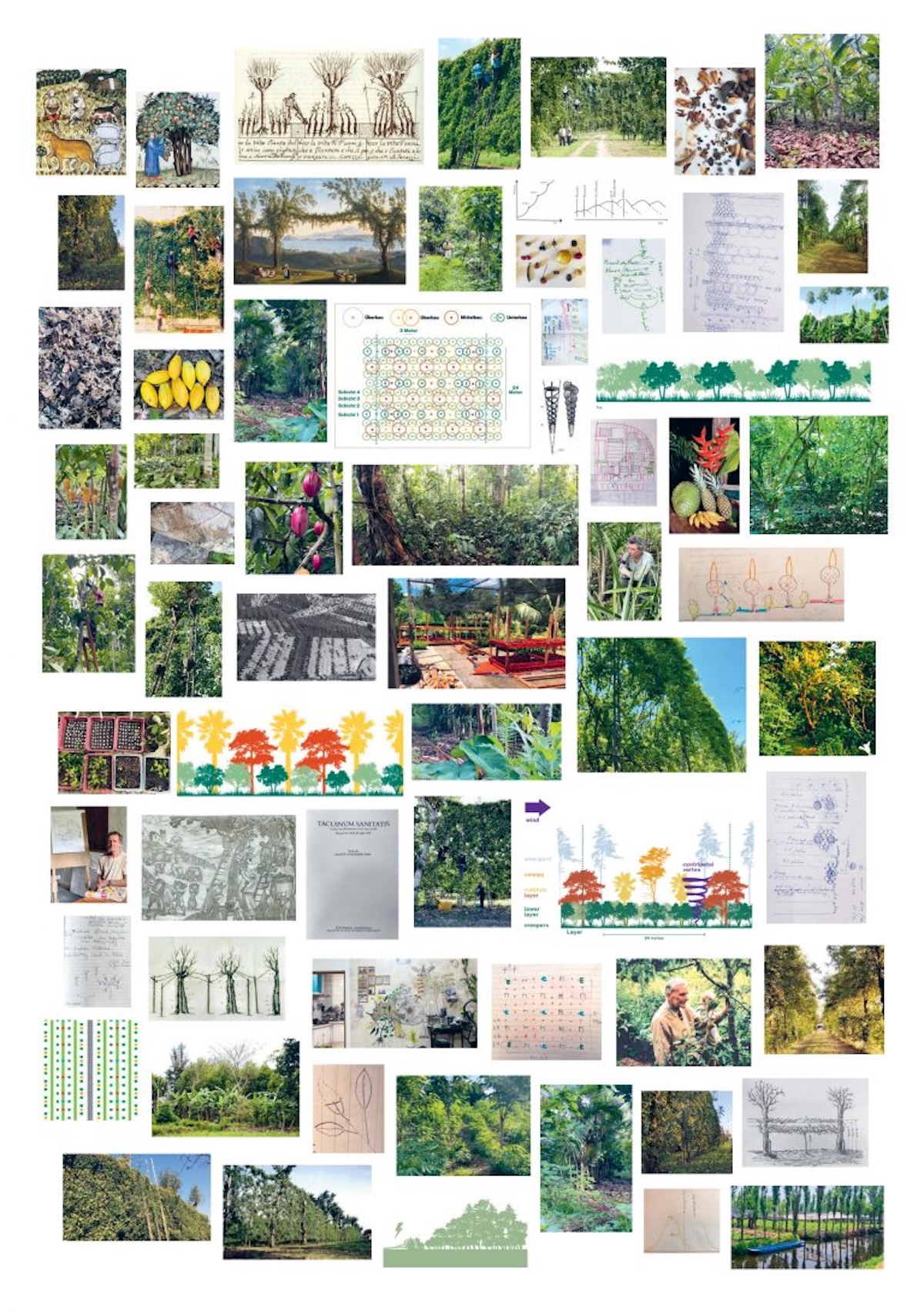
The exhibition provides insight into the digital archive of Swiss landscape architect Maurus Schifferli, viewing it not merely as a collection of completed projects, but as a dynamic system for organizing thought. Ideograms, drawings, photographs, plans, and project fragments form a relational structure in which design processes, memories, and motifs overlap and continue.
Relevant content is extracted from an extensive digital data set using thematic tags and made visible in changing constellations. The database functions not only as a repository, but also as an active control instrument: it enables a genealogical reading of the work, in which projects are linked less chronologically than by affinities, recurrences, and shifts. The exhibition presents a curated, yet fragmentary excerpt from this collection in three parts—in the form of picture panels, presentation plans, and dispositives for five projects.
The term Mnemosyne deliberately refers to Aby Warburg's picture atlas of the same name, in which images were arranged not according to art-historical categories, but according to associative, symbolic, and motivic relationships. Mnemosyne here does not refer to a static canon of memory, but rather to a space for thought in which meanings arise from neighborhoods and constellations. In this tradition, the Schifferli Archive also understands memory as a topological structure: not linear, not closed, but mobile and constantly updatable. Landscape architecture is understood not merely as spatial or processual design, but as a practice of remembering, narrating, and organizing—as a space for thinking and seeing in which images, concepts, and ideas take effect in ever-changing constellations.
Opening: January 20, 2026, 6 p.m.