8 Buildings, 1 Engineer
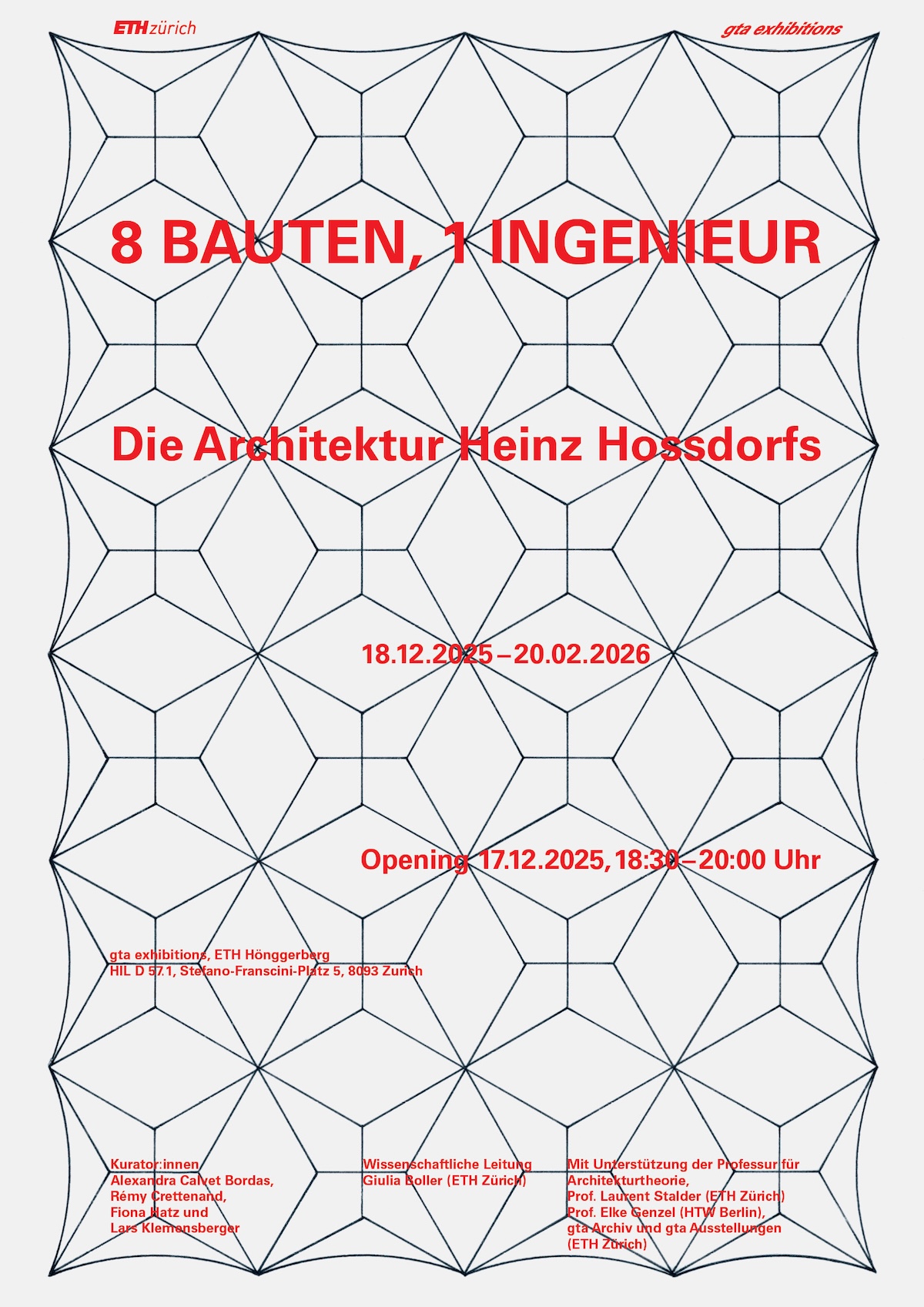
Heinz Hossdorf (1925–2006) ranks among the most original civil engineers in 20th-century Swiss architecture. He was a valued partner in design and execution for numerous architects, including Otto and Walter Senn, Felix Schwarz and Rolf Gutmann, as well as Vischer & Weber Architects and Burckhardt Architects. As a pioneer of computer-aided methods in civil engineering, Hossdorf witnessed the transition from traditional to innovative design processes.
His models—both physical and digital—gave him the freedom to experiment beyond existing engineering theories, architectural typologies, and normative standards. The sculptural expression of his buildings reflects the growing importance of engineers in the design of public buildings and exemplifies how structural innovations, material behavior, and aesthetic character can be unified.
The exhibition 8 Buildings, 1 Engineer presents eight exemplary projects: from the rubber band weaving mill in Gossau (1954–1955) and the Bruder Klaus Church in Winkeln (1957–1958) to the VSK central warehouse in Wangen near Olten (1958–1961), the gravel and concrete plant in Gunzgen (1960–1962), the reading room of the University Library of Basel (1962–1964), and the “Les échanges” at Expo 64 in Lausanne (1962–1964), the Theater Basel (1968–1976), and the unrealized design for the Swiss pavilion at the 1992 World Expo in Seville (1990).
For the first time, original documents from the archives of his Basel engineering office are being brought together with documents from architects' estates and from company and building contractor archives. This creates a multi-layered picture of Heinz Hossdorf's working methods between engineering and architecture – from the idea to the model to execution and communication.