The Apartment Building in the Housing Question
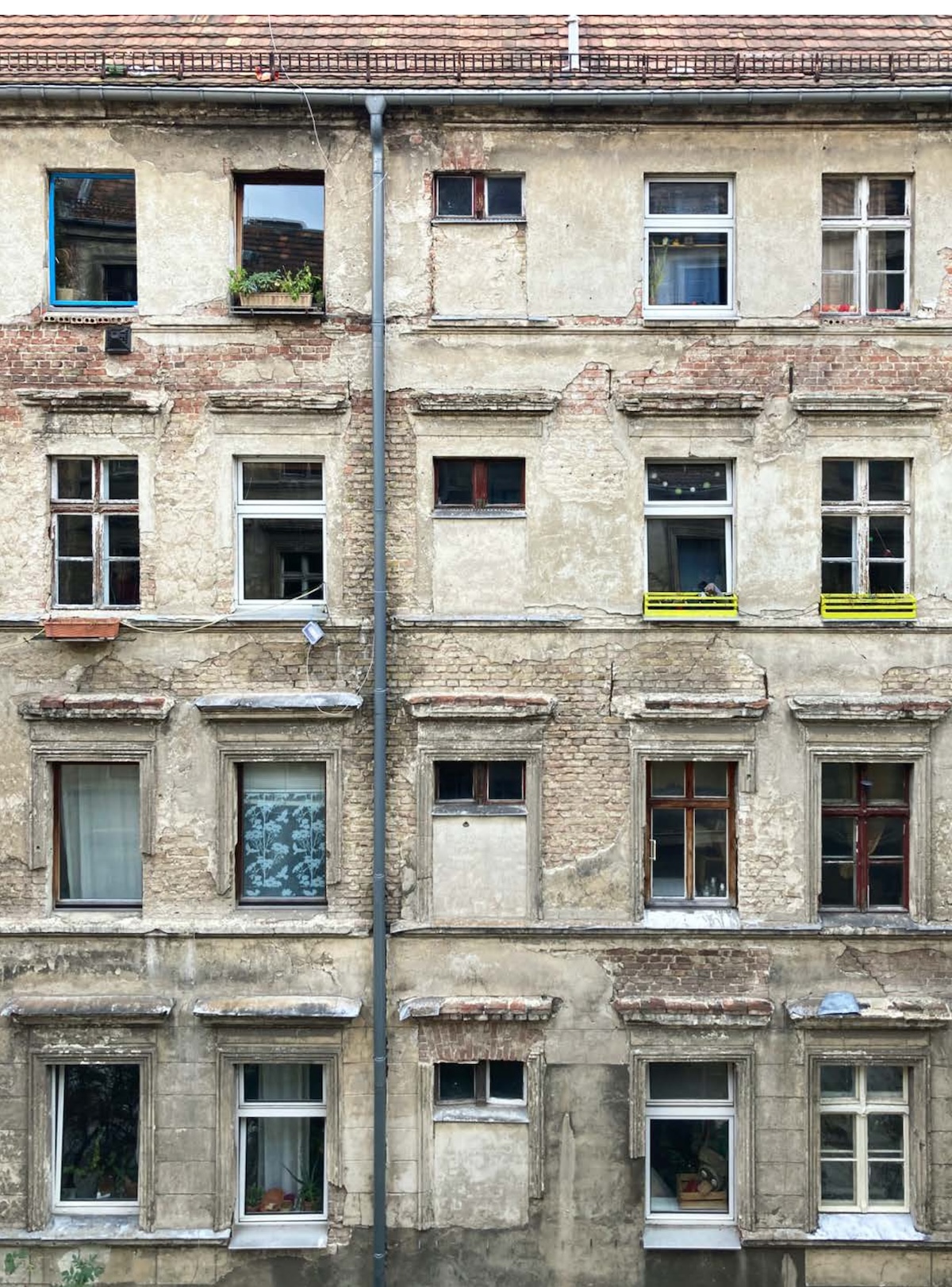
A stagnant rental market and the persistent shortage of social housing in Berlin demonstrate that an exclusive focus on new construction is insufficient to solve the housing question. The current housing debate has largely overlooked the invisible vacancy that has become entrenched due to housing market dynamics such as the lock-in effect and the expiration of social housing commitments after 30 years.
Berlin's Gründerzeit-era apartment buildings, with their spacious apartments, have received little attention in the housing debate. Yet, they still characterize large parts of the city – roughly a quarter of Berlin's apartments were built before 1918. In the current discourse on the transformation of the building stock, the Berlin apartment building has virtually disappeared from view. Reliable data on this so-called invisible vacancy remains incomplete.
A design studio at TU Berlin, in collaboration with diverse partners, is exploring the potential of this typology for socially diverse and community-organized forms of housing and is developing instruments and tools to activate existing, unused housing potential and appropriately continue the legacy of this historical building type.
The students' designs exemplify how the spacious Gründerzeit-era buildings could accommodate twice as many people—while simultaneously fostering a wide variety of housing types and social diversity. This involves renegotiating the relationship between individual living space and shared areas: smaller, high-quality private spaces are contrasted with increased communal areas.
Within the framework of the vertically organized studio (Bachelor's and Master's students), a range of adaptive development scenarios from 2025 to 2075 are presented, deliberately minimizing interventions in the existing structures.
The starting point for developing transferable concepts for a mixed-use city is a selection of speculative and vacant Gründerzeit-era buildings. The designs aim to explore the Berlin tenement building as a model space for sustainable conversion practices through sharing—spatially, socially, climatically, and economically.
Each design project formulates its own unique qualitative response, thus becoming an experiment in a new residential culture.
For two weeks, the design studio will move into the basement of the "Tuntenhaus" (a former drag house), creating a temporary space for reflection and discussion that invites participants to understand transformation as an open, negotiable process. The students will be available for on-site dialogue and individual consultations regarding living spaces.
Opening: February 19, 2026, 7 p.m.